Built to Appreciate: How Atlanta's Luxury New Construction Holds and Grows Value
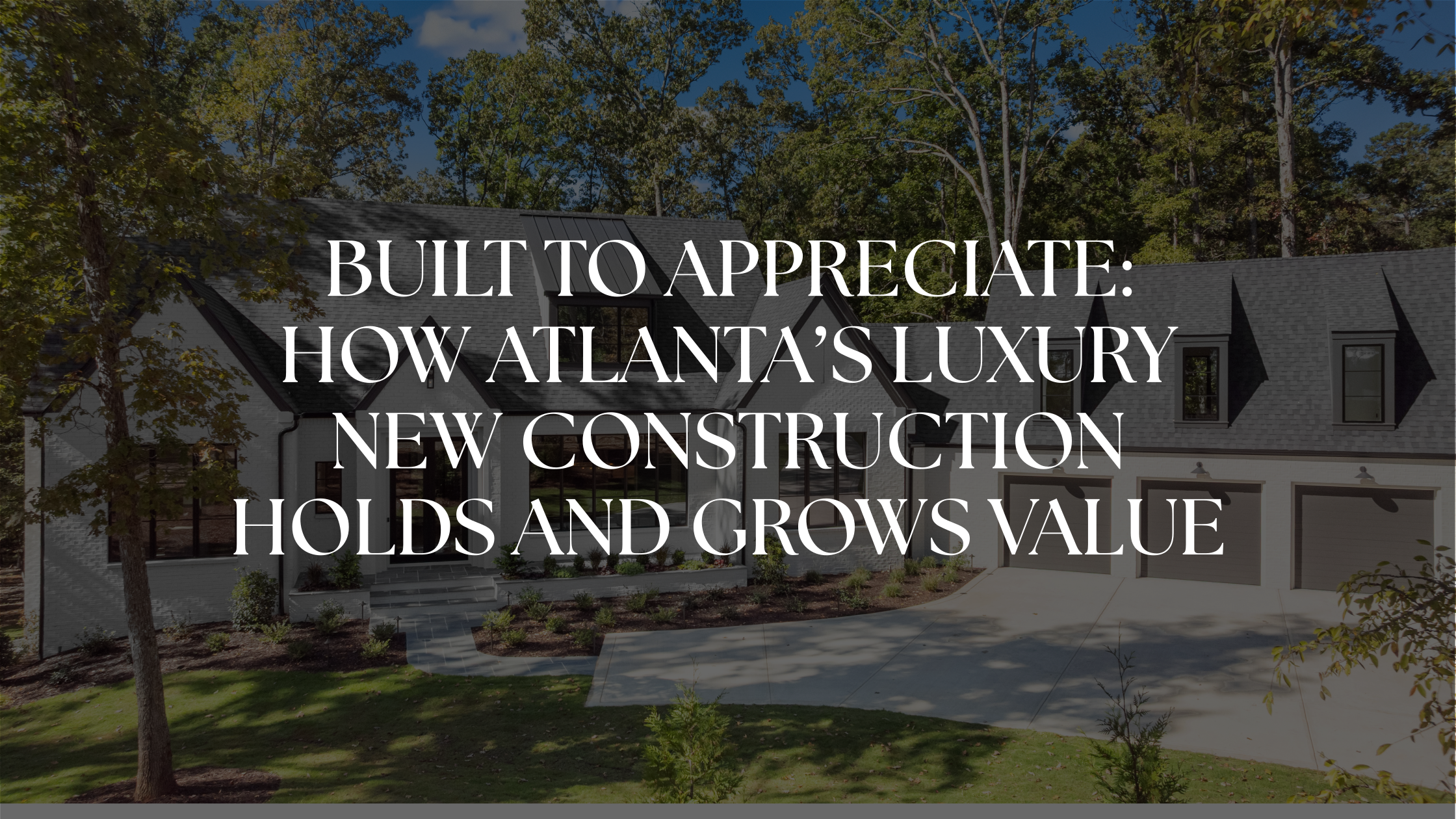
There's a conversation that rarely happens in the early stages of a luxury home search, but almost always surfaces before the ink dries: what does this home do for me as an asset over time?
It's the right question to ask, and the fact that it often comes late in the process is partly because the real estate industry tends to frame it poorly. Most conversations about resale value are framed around fear: will I be able to get out if I need to? That's not how Atlanta's luxury buyers at the level WG serves actually think. For them, the question is about capital preservation, long-term positioning, and understanding whether a home performs the way any serious investment should. They've watched markets fluctuate. They understand the difference between buying well and buying impulsively. And they want a team that can speak to the asset argument with the same depth as the design argument.
At Wieloch | Goldstein of Compass, we've spent 15 years helping buyers make decisions they're still grateful for a decade later. Here's how we think about what makes Atlanta's luxury new construction not just a place to live, but a genuinely sound long-term asset.
Atlanta's Macro Story Is a Tailwind, Not a Backdrop
The first thing any serious buyer should understand is that Atlanta's market fundamentals are among the strongest of any major metro in the country — and those fundamentals directly support long-term home values.
According to the most recent U.S. Census Bureau Vintage 2025 Population Estimates, metro Atlanta now stands as the nation's sixth-largest metro with 6.482 million residents, and has added nearly 400,000 residents since the start of the pandemic. In the year ending July 2025 alone, metro Atlanta added roughly 62,000 people, ranking third in the country in numeric growth behind only Houston and Dallas. That consistent, sustained growth trajectory (not a single-year spike) is one of the strongest structural signals any market can offer.
The professional and technical sector is growing faster here than the national average, creating a consistent pipeline of high-income households entering the market. Fulton County home values remain roughly 45% above their pre-pandemic baseline even after the market's 2022-2023 recalibration, and many Atlanta submarkets saw appreciation of 50-75% between 2019 and 2024. The current market is not in retreat — it's in a healthy normalization after a period of extraordinary gains, now tracking at moderate, sustainable appreciation in established submarkets.
For luxury buyers, the macro story matters because it frames the floor. Atlanta isn't a boom-and-bust market. It's a city with deep employment anchors, consistent population growth, and the trajectory of a metro that continues to grow in national influence.
Location Permanence: Why WG's Core Markets Are Structurally Sound
Not all of Atlanta appreciates equally — and that's important to understand. The neighborhoods where WG primarily builds and sells luxury new construction are not emerging markets. They're established addresses with decades of demonstrated demand and the kind of permanence that underpins long-term asset value.
Buckhead
Buckhead is not going anywhere. It has been Atlanta's most prestigious residential address for generations, home to the Governor's Mansion and some of the city's most prominent residents. The luxury home market here is supported by a combination of prestige, world-class amenities, and a finite supply of desirable land. That land scarcity is one of the most important drivers of long-term value. When there's nowhere left to build comparable product, the existing supply holds its value more reliably.
Sandy Springs and Brookhaven
Both are largely built out, with limited remaining lots for luxury new construction. Resale appreciation in submarkets defined by land scarcity tends to be strongest over time, because new construction can't perpetually replenish supply and dilute the market.
Milton and Alpharetta
These markets offer a different kind of structural strength: school districts that consistently rank among the best in the state. Research consistently shows that school clusters here command meaningful premiums — in some cases 10-20% above comparable homes in adjacent districts — and that premium doesn't erode over time because the school quality that drives it is institutional, not cyclical.
Morningside and Virginia Highlands
These neighborhoods carry the premium of in-town proximity, architectural character, and walkable lifestyle that has proven its staying power across multiple market cycles. The consistency of demand in these submarkets is itself a form of asset protection.
New Construction Starts at the Top of the Comparable Market
This is one of the most important and least discussed dynamics in luxury real estate: a well-executed new construction home in a desirable neighborhood typically enters the market at or near the ceiling of comparable sales — and then tracks the neighborhood's overall appreciation from that higher baseline.
A renovated older home, by contrast, often starts at a discount to new construction, appreciates toward the ceiling as the market rises, and then faces ongoing deferred maintenance costs that erode net returns over time. New construction avoids that erosion. The systems are new, the warranties are active, the finishes reflect current standards, and there's no hidden deferred maintenance compressing future value.
For the WG portfolio specifically, the builder and design quality of each home is itself a long-term value driver. A WilliamMark Designs home in Buckhead will compete differently in a resale market ten years from now than a generic spec build in the same zip code, because the architectural identity, the material quality, and the design intentionality that made it distinctive on day one continue to distinguish it from the field. Builder reputation doesn't depreciate. In a submarket where buyers are educated and discerning, it often appreciates.
The Design Longevity Factor
One of the quiet risks in luxury new construction is buying a home that reflects a moment rather than a standard. Trend-driven design can date a home faster than age alone. Buyers who understand this shop differently. They're looking for homes where the design choices were made with permanence in mind, not to chase what was fashionable last season.
WG's approach to builder partnerships is built explicitly around this. The material choices across our portfolio — wide-plank white oak hardwoods, quartzite and soapstone countertops, European cabinetry, natural stone finishes — are not trendy. They're timeless. The floor plans in our builds are designed around how people live today, with the flexibility to continue working as life changes: primary suites that function as genuine retreats, home offices designed as architectural spaces rather than afterthoughts, outdoor living environments that will remain relevant regardless of what interior trends do next.
A home with design longevity competes strongly at resale regardless of the vintage. That's not accidental. It's a function of the design standards WG holds its builder partners to from the beginning.
Infrastructure as a Long-Term Value Signal
Experienced buyers know that one of the most reliable predictors of long-term home value is infrastructure investment and what governments and developers are committing to spend in and around an area over the next decade. That spending signals confidence in a market's trajectory, and it creates the amenity improvements that support future appreciation.
Atlanta's pipeline here is significant. Continued commercial development and corporate relocations are expanding the employment base in North Fulton. Alpharetta's downtown continues to mature into a genuine mixed-use destination, which supports property values throughout the submarket. Infrastructure improvements along major corridors connecting Buckhead and Sandy Springs to the broader metro are ongoing. These aren't speculative bets — they're publicly committed investments with real timelines, and buyers who understand how to read them are essentially front-running future appreciation.
WG's depth of market knowledge in our core submarkets means we can advise buyers not just on a home's current value, but on what the surrounding market trajectory looks like and whether the infrastructure fundamentals support the long-term asset case.
What This Means for How You Buy
For a luxury buyer thinking about a new construction home as an asset, the purchase decision should be filtered through a set of questions that go beyond finishes and floor plans:
Is the location structurally sound? Is it an established market with demonstrated demand and finite land supply, or an emerging market with more price volatility?
Is the builder's work distinguished enough to command a premium at resale? Or is the home a well-executed spec build that will blend into the comparable market over time?
Are the design choices timeless or trend-dependent? Will this home look intentional in fifteen years, or will it read as a product of its era?
Are the macro fundamentals of the market — population growth, employment base, corporate investment — creating sustained demand at this price point?
At WG, these are questions we bring into the conversation from the beginning, because the best luxury home purchase is one that works as a residence from day one and as an asset over the long term. Those two objectives are not in tension when the decision is made well. In fact, in Atlanta's strongest submarkets with the right builder and the right design standard, they point to exactly the same home.
Curious about how specific properties and neighborhoods in WG's portfolio are positioned as long-term assets? Connect with us at wgatlhomes.com to have that conversation with a team that has spent 15 years watching Atlanta's luxury market perform — and building a portfolio designed to outperform it.
Stay up to date on the latest real estate trends.
For Buyers Who Think About a Home as a Capital Decision, Not Just a Purchase
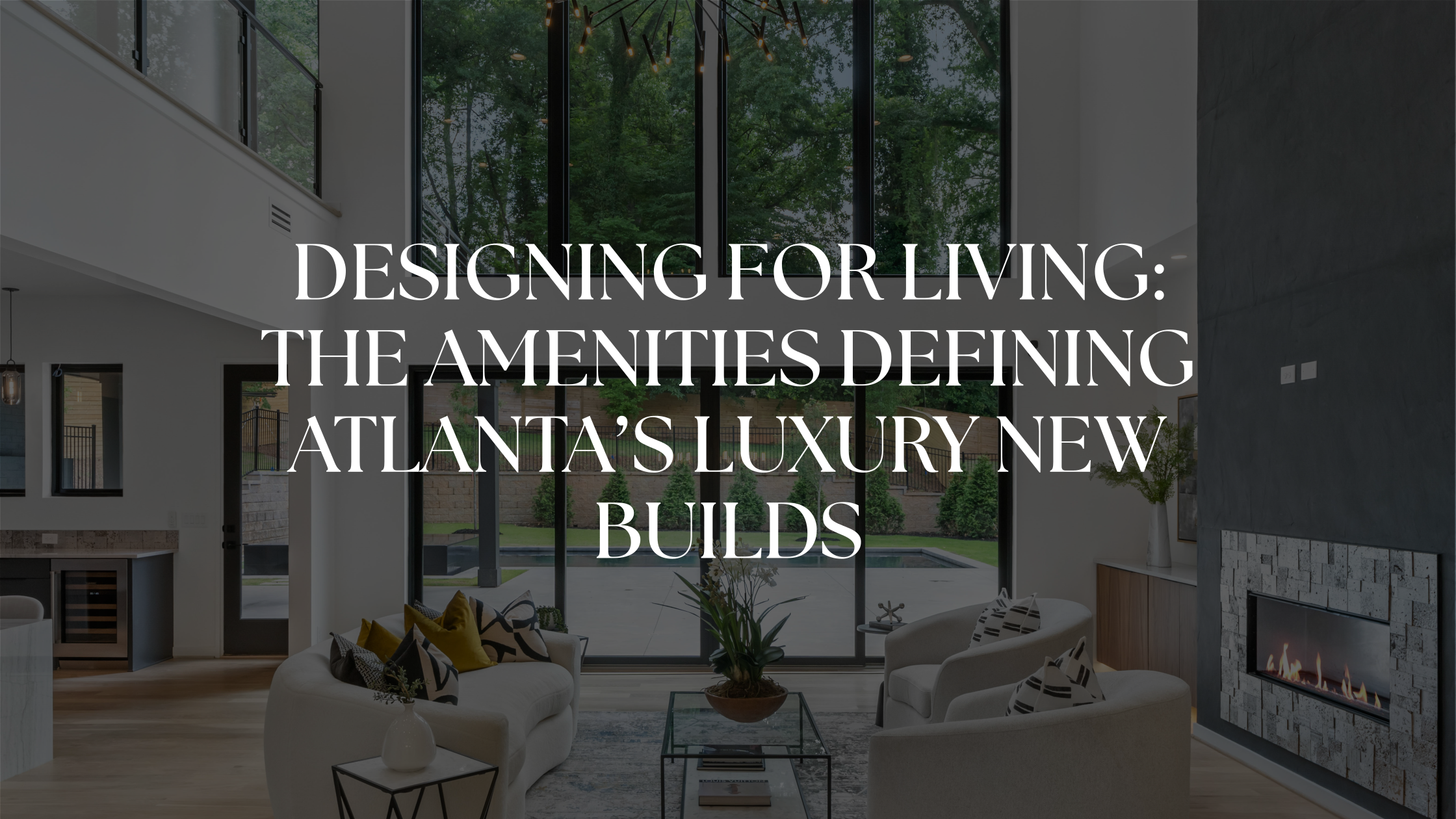
From Sculleries to Smart Homes — What Today's Luxury Buyers Actually Want
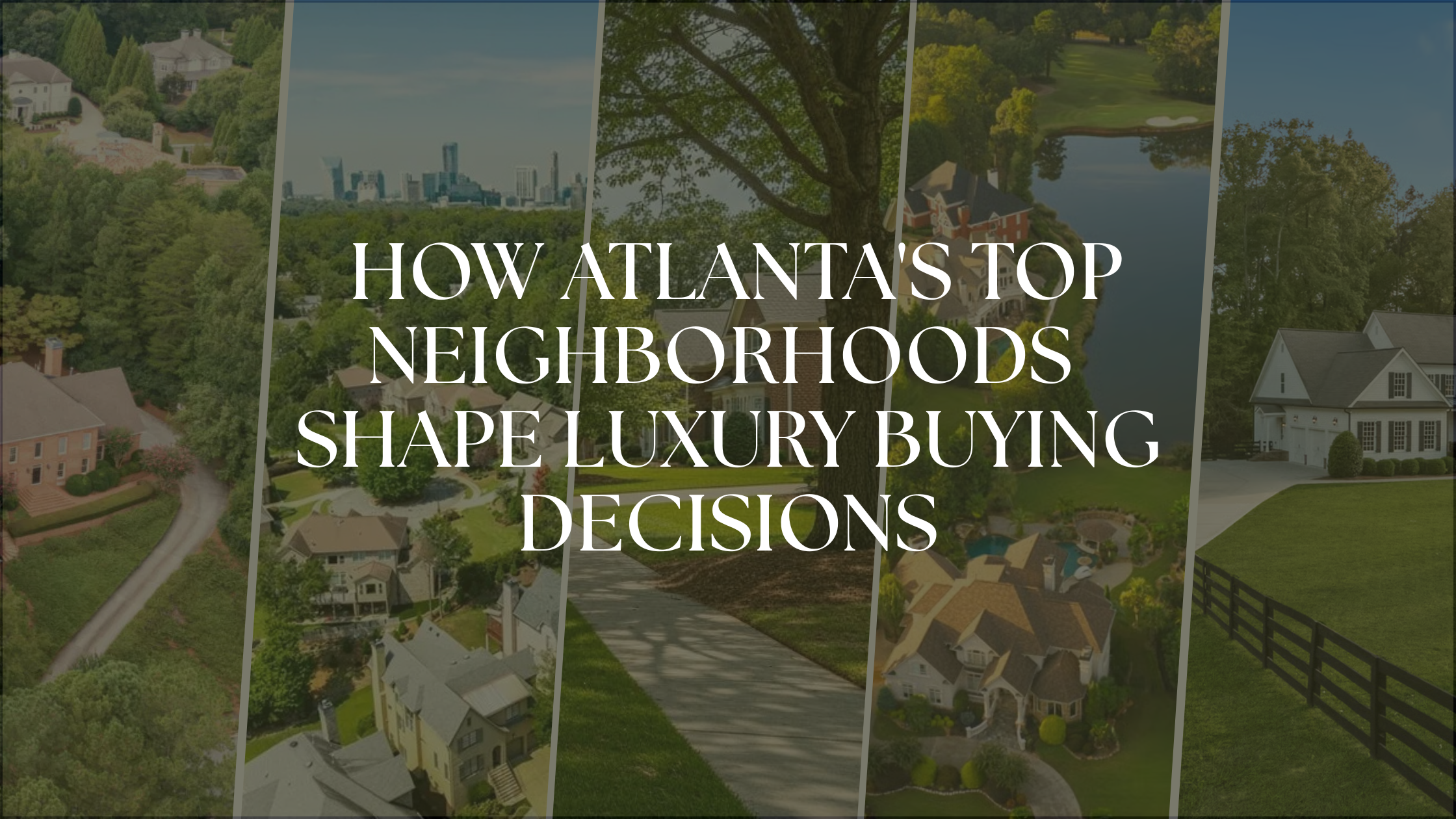
What 15+ Years of New Construction Taught Us About Location, Value, and Lifestyle
Why Statement Staircases Are Selling Homes Faster in 2026

2026 Home Design Trends

Here's the Verdict

5 Questions to Ask Yourself Before Deciding
A Growing Shift Toward Brand-New Homes
TWG has developed a reputation for innovative marketing and being one of the Top Producing teams in the Atlanta Real Estate Market. Together, we offer an impressive 50 years of combined experience and skill, which allows us to help our clients find their dream homes no matter what their needs are.